Every point in Pipa Combate comes from the same event: your line and a rival's line cross somewhere above the rooftops, they lock, and one of them gives out. Everything else — flying, climbing, chasing — is setup for that moment. It is worth understanding exactly what the game is measuring.
The cross has to be a real cross
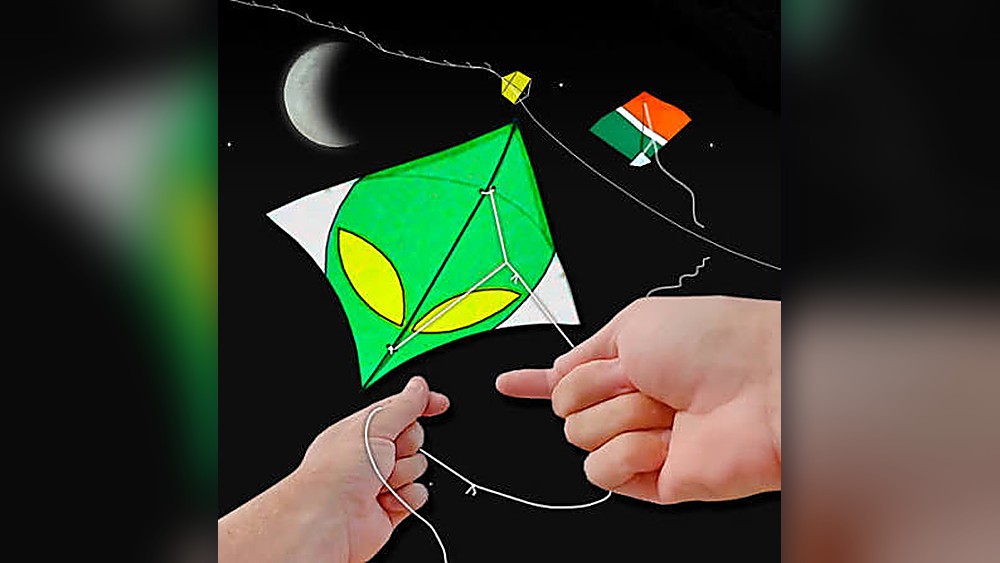
The game does not check whether your kite touched the rival kite. It checks whether the two lines intersect, and it ignores crossings that happen near either anchor. That rule exists for a reason: a tangle down by someone's hands is not a fight, it is an accident. So the useful crossing zone is the middle and upper stretch of both lines, which is why good players fly wide and high rather than hovering next to the enemy kite.
In practice this means you should think about your line as the weapon and the kite as the handle you steer it with. If you want to cross a rival's line, you do not fly at their kite. You fly past it, to the far side, and let the geometry do the work.
What the meter is measuring
Once the lines lock, both sides start generating pressure every frame. Yours comes from three things:
- Line grade — the flat multiplier you buy in the spool shop.
- Speed — how fast your kite is actually moving, not where it is pointed.
- Sawing — whether you are holding the saw input, scaled down as your grip runs out.
The rival generates pressure the same way, plus an aggression value that rises with the wave number. The meter moves by the difference between the two. That is the whole model, and it has one big consequence: two players with identical upgrades can get completely different results from the same lock, purely based on whether they kept the kite moving.
The short version: a parked kite that is sawing beats a moving kite that is not. A moving kite that is sawing beats almost anything at the same line grade.
Why the fight is usually decided early
Grip drains while you saw and refills while you do not. A full grip bar buys you roughly four and a half seconds of full-strength sawing. Most wave-one locks resolve in about three. So if you enter a lock with a full bar and immediately start weaving, you win comfortably. If you enter one with a quarter bar because you were sawing at nothing a second earlier, you are already losing and the meter has not even appeared yet.
This is the single most common beginner mistake: holding the saw input permanently, the way you would hold a fire button in a shooter. Saw is not a fire button. It is a resource you spend at the moment the lines touch.
What happens when a line breaks
The losing kite goes free. It does not vanish — it tumbles, drifts with the wind, and stays chaseable for several seconds. If it was a rival's kite, flying over it earns you spools. If it was yours, you lose it from the bag and a fresh one climbs out after a short pause, with the meter reset to zero.
One detail that trips people up: if a lock breaks because the rival ran away rather than because someone got cut, the game remembers your progress for a couple of seconds. Re-cross quickly and you resume most of the way through instead of starting over. Retreating is a delay, not an escape.
Practising it
Wave one gives you a single opponent with a weak line and low aggression. Use it deliberately: enter a lock with a full grip bar, weave in tight figure-eights across the contact point, and watch how fast the meter swings. Then try the same lock while sitting still. The difference between those two runs is the whole skill ceiling of the game in one comparison.
Experimente no jogo
Pipa Combate é grátis e roda neste navegador.
Continue lendo
 Melhorias · 4 min de leitura
Pipas reserva ou uma linha melhor? Gastando seus carretéis
Capacidade ganha no começo, sobrevivência ganha no fim. O truque é saber em qual dos dois você está.
 Vento · 5 min de leitura
Lendo o vento antes de assumir uma trava
O indicador de vento é a coisa mais ignorada do HUD, e ele decide metade das suas brigas.